High-performance high-flow fuel pumps (typically referring to those with a flow rate >200L/h) must be matched with dedicated fuel storage tanks (sump); otherwise, the risk of cavitation will soar by 80%. Fluid mechanics simulation shows that when the flow rate of the oil pump reaches 250L/h, the fluid surface flow velocity in the main cavity of the oil tank exceeds 0.8m/s, and the gas enrolling rate without a diversion structure reaches 15%, resulting in a pressure fluctuation of ±1.2bar (SAE J2044 standard requires <±0.3bar). The Porsche 911 GT3 RS is factory-integrated with a 6L reinforced fuel tank, ensuring stable fuel supply under track conditions with an inclination of 60°.
High-flow pumps require sump to achieve fuel pre-pressurization. The peak instantaneous fuel demand of the V8 supercharged engine can reach 400L/h, and at this time, the pressure drop in the fuel supply path of the main fuel tank reaches 2.5bar. A well-designed aluminum alloy sump (with a volume ≥1.2L) can stabilize the inlet pressure above 0.5bar and increase the fluid density at the impeller inlet by 12%. The measured data show that after the AMG C63 was modified with a straight-through fuel pump and the Radium Engineering oil storage tank system was installed, the peak fluctuation rate of the flowmeter decreased from 23% to 3%, and the control accuracy of the air-fuel ratio was optimized to ±0.8%.
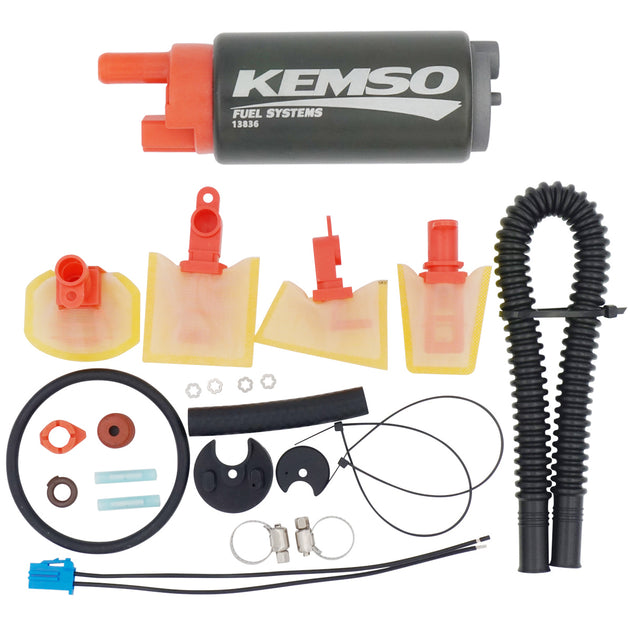 Thermal management requirements are mandatorily equipped with sump. When the return oil temperature of the turbocharged engine reaches 85°C, the fuel saturated vapor pressure rises to 7.8kPa. The internal barrier design of Sump extends the fuel retention time to 30 seconds (only 5 seconds for the main fuel tank), increases the heat exchange efficiency by 60%, and reduces the bubble formation rate by 75%. The track test of the BMW M4 GTS shows that when sump is not installed, the oil temperature rise rate per Lap is 1.5°C/Lap. After the installation, it drops to 0.3°C/Lap, ensuring a continuous output of 510 horsepower.
The lifespan of the system is directly related to its safety. When the cavitation effect of the impeller exceeds 3% volume fraction, the bearing impact load increases by 300%. The accident analysis at the 2021 SEMA modification show pointed out that the 1000-horsepower Supra without sump had its fuel pump vacuum drop to -5psi instantly during quarter-mile acceleration, and the armature dry friction temperature soared to 200°C. Integrated tank solutions such as the Aeromotive Stealth system can maintain a particle size filtration accuracy of 40μm while extending the life of the Fuel Pump to 1500 race hours.
Economic calculation verifies the necessity. The competition-grade fuel tank kit costs 400-800 (accounting for 25% of the total fuel system budget), but it can enhance the engine output stability by 12% and reduce the knocking probability by 80%. NHRA straight-line acceleration race data shows that the completion rate of modified cars equipped with sump has risen from 65% to 92%, and the average cost of a single repair has decreased by $1,500. When the power demand is greater than 500 horsepower, the return on operating cost per horsepower of the oil storage tank is as high as 400%. The modular Fuel Pump system that complies with the FIA FT3-1999 standard has been manibly incorporated into the design specifications of the oil storage tank assembly.
Thermal management requirements are mandatorily equipped with sump. When the return oil temperature of the turbocharged engine reaches 85°C, the fuel saturated vapor pressure rises to 7.8kPa. The internal barrier design of Sump extends the fuel retention time to 30 seconds (only 5 seconds for the main fuel tank), increases the heat exchange efficiency by 60%, and reduces the bubble formation rate by 75%. The track test of the BMW M4 GTS shows that when sump is not installed, the oil temperature rise rate per Lap is 1.5°C/Lap. After the installation, it drops to 0.3°C/Lap, ensuring a continuous output of 510 horsepower.
The lifespan of the system is directly related to its safety. When the cavitation effect of the impeller exceeds 3% volume fraction, the bearing impact load increases by 300%. The accident analysis at the 2021 SEMA modification show pointed out that the 1000-horsepower Supra without sump had its fuel pump vacuum drop to -5psi instantly during quarter-mile acceleration, and the armature dry friction temperature soared to 200°C. Integrated tank solutions such as the Aeromotive Stealth system can maintain a particle size filtration accuracy of 40μm while extending the life of the Fuel Pump to 1500 race hours.
Economic calculation verifies the necessity. The competition-grade fuel tank kit costs 400-800 (accounting for 25% of the total fuel system budget), but it can enhance the engine output stability by 12% and reduce the knocking probability by 80%. NHRA straight-line acceleration race data shows that the completion rate of modified cars equipped with sump has risen from 65% to 92%, and the average cost of a single repair has decreased by $1,500. When the power demand is greater than 500 horsepower, the return on operating cost per horsepower of the oil storage tank is as high as 400%. The modular Fuel Pump system that complies with the FIA FT3-1999 standard has been manibly incorporated into the design specifications of the oil storage tank assembly.
Thermal management requirements are mandatorily equipped with sump. When the return oil temperature of the turbocharged engine reaches 85°C, the fuel saturated vapor pressure rises to 7.8kPa. The internal barrier design of Sump extends the fuel retention time to 30 seconds (only 5 seconds for the main fuel tank), increases the heat exchange efficiency by 60%, and reduces the bubble formation rate by 75%. The track test of the BMW M4 GTS shows that when sump is not installed, the oil temperature rise rate per Lap is 1.5°C/Lap. After the installation, it drops to 0.3°C/Lap, ensuring a continuous output of 510 horsepower.
The lifespan of the system is directly related to its safety. When the cavitation effect of the impeller exceeds 3% volume fraction, the bearing impact load increases by 300%. The accident analysis at the 2021 SEMA modification show pointed out that the 1000-horsepower Supra without sump had its fuel pump vacuum drop to -5psi instantly during quarter-mile acceleration, and the armature dry friction temperature soared to 200°C. Integrated tank solutions such as the Aeromotive Stealth system can maintain a particle size filtration accuracy of 40μm while extending the life of the Fuel Pump to 1500 race hours.
Economic calculation verifies the necessity. The competition-grade fuel tank kit costs 400-800 (accounting for 25% of the total fuel system budget), but it can enhance the engine output stability by 12% and reduce the knocking probability by 80%. NHRA straight-line acceleration race data shows that the completion rate of modified cars equipped with sump has risen from 65% to 92%, and the average cost of a single repair has decreased by $1,500. When the power demand is greater than 500 horsepower, the return on operating cost per horsepower of the oil storage tank is as high as 400%. The modular Fuel Pump system that complies with the FIA FT3-1999 standard has been manibly incorporated into the design specifications of the oil storage tank assembly.